The First Exclusive BREED: Heavenly Sequoias™
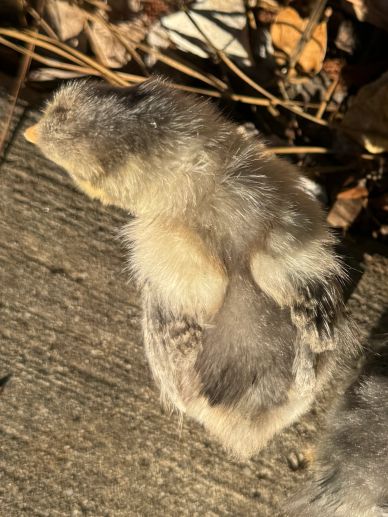
Baby Blue Sequoia Cockerel
The Juvenille Blue Sequoia Cockerel

When I began my chicken journey, I never dreamed I would love chickens as much as I do, nor did I imagine how creative it would be to breed for egg color, feather variations, and bird type.
After a year in of learning about egg colors, types of chickens and feather variations and the ability to change genetics through creative breeding, I wanted to create my own.
I am a tall person and enjoy bigger animals, so it isn't surprising that I would want to create a large breed. I love thick, feathery, and sweet tempered breeds, and with that...I started crafting the Heavenly Sequoia™.
The very first HSq chicks were all blue, jumbo in size, and extra feathered. They were curious, friendly, and very mellow in nature. The photo above is an example of a 6 week old cockerel.
The Juvenille Blue Sequoia Cockerel
The Juvenille Blue Sequoia Cockerel

My first and second hatches gave me five Sequoia cockerels and four pullets. Three boys were a much darker blue and Wyatt along with another cockerel was a lighter blue. I had a surprising spangled version who was a knock out as a chick. I have photos below of his progression.
At that time, I really wanted to focus on the lighter blue, so I kept Wyatt as my main breeding rooster. In this photo, he was about 10-months old. Still quite the juvenille. He hadn't even started crowing yet.
I found that all of my boys matured much slower than every other breed I owned. HSqs crow later and breed later, but the hens start laying at a normal 5-7 months. I was shocked that two of my girls laid rose/mauve colored eggs and another laid eggs that had speckles. I did not realize that the eggs would be so HUGE in size. But it makes sense for the breed.
The Adult Blue Sequoia Rooster

This photo is of an almost 2-year old Wyatt. His has gone through one molting and his body has filled out quite a bit. This is a perfect confirmation photo of this breed. His back is long and his tail is at a 45 degree. He is wider than taller and his legs are chunky and heavily feathered. His chest is very broad and his head is strong and regal, clean with long lobes and medium to long wattles. His face is masked red with sharp yellow/orange eyes and a medium length beak.
The signature Tiara™ comb is currently not found on any other breed. The roosters have a thick and short single row of pointed Navettes with another row of points that can extend out on either side of the center comb. I am referring to the extended outer points as Side Navettes and shorter points as Side Accents.
Not all HSq roosters have had the signature Tiara™ comb, which is why I am only currently using Wyatt and Thor as my breeding roosters. The hens also have a small Tiara™ comb which ranges in size and color.
A Baby Blue Sequoia Pullet
The Juvenile Blue Sequoia Pullet

Sequoia chicks come in blue, smoke, splash, fawn, spangled, and laced. The most common color is light to medium blue, but I am being surprised by the new colors I have been getting out of each breeding hatch. As I hatch new chicks, I take meticulous notes, so I can determine which lines I want to keep in my breeding program and which lines I want to wait on for a future endeavor.
The Juvenile Blue Sequoia Pullet
The Juvenile Blue Sequoia Pullet
The Juvenile Blue Sequoia Pullet

I will show the trio of this photo in a moment, but I wanted to focus on the Sequoia pullet as a juvenile. It is an awkward stage, more for the cockerels than the pullets, but I want to note with Lana that her feathering is closer to a smoke than a blue. As she has aged though, her feather coloring has lightened. Thor has been the same, which you will see below. Lana also has more of a Pea comb than a Tiara comb and small dark wattles, so though she is still a beautiful hen, my personal focus will be to have breeders with a pink Tiara and small pink wattles like Hannah.
The pullets start to lay between 5-7 months, are not broody, and they are not aggressive toward one another.
The Adult Blue Sequoia Hen
The Juvenile Blue Sequoia Pullet
The Juvenile Blue Sequoia Pullet

This is Hannah as an adult hen. You can see what she looked like as a baby chick to the far left. As an adult hen, the feathers are light to dark blue with a darker lacing on the tips of each feather. This give an illusion of layered flower petals. I will have photos of the eggs down below.
Hannah has a pink Tiara comb and small pink wattles. They are a beautiful accent to her blue feathers and delicate facial features. This is my preference for my personal breeding sop, but it isn't necessary for the breed as a whole.
You can see how wide and plump her body is, the tail is at a 45 degree angle and her face is slightly pink masked. Her legs are heavily feathered and her head is regal and strong.
color variations
Baby Smoke Sequoia

This is a new smoke baby. I believe it is a pullet and if so, I will be breeding her with Thor to hatch Smoke Sequoia babies mid-season of 2027. Stay tuned!
Smoke Juvenile Cockerel (left)
Last year these three came from the same hatch. Thor is my Smoke Sequoia on the left as a 6-month old. You can see him at almost one year in the next photo to the right.
Adult Smoke Sequoia
Adult Smoke Sequoia

This is Thor at almost a year old. His smoke base has softened on his chest, belly, and legs, but his feathers on the upper part of his body and his tail feathers are much darker than Wyatts. This could change as his hackle, wing, and saddle feathers mature. Wyatt changed quite a bit in a 2-year period of time. Molting can make a big difference in feather coloring.
Currently Thor is hanging out with the non-breeding bachelors as they enjoy their free-ranging privileges. What luxury!
Baby Splash Sequoia
Adult Smoke Sequoia
I just hatched two splash babies and can't wait to see how they feather out. I will be posting more photos as they mature. The pink, mauve/rose, and speckled peach are from my recent hatch. Can't wait to share more. Stay tuned!!
Splash Juvenile Cockerel (right)
Splash Juvenile Cockerel (right)
I have had two Splash Sequoia roosters now and neither have had the signature Tiara™ comb I am breeding for, but they have both fit the size, temperament, body type, and feathering style I am focusing on. Spencer is on the far right at 6-months old here. You can see him at 15-months in the next photo.
Adult Splash Sequoia Rooster
Splash Juvenile Cockerel (right)
This boy is CHUNKY! He has a lot of fluff and he knows he is fabulous. Splash feathering is one of my favorite colors, so I am thrilled to have this variation as a part of my HSq line. His Tiara™ is slightly longer than what I am trying to accomplish for my boys, so I am waiting on my newest splash chicks to see how their Tiara™ develops. Spencer is currently leading a flock at another homestead.
Baby Mink Partridge Sequoia
Baby Mink Partridge Sequoia
I am very eggcited about the two new colors for 2026! This chick, along with other similar chicks, all hatched with a chipmunk pattern. As they have feathered out, they have quite a bit of lacing not just on their wings, but also on their entire body. More time is needed to see if they are going to remain multi-colored with the lacing or if they will have some blue tones. I will be posting juvenile and adult photos soon. Stay tuned!
Baby Fawn Laced Sequoia
Baby Mink Partridge Sequoia
This stunning fawn-colored chick with lacing on its' wings was hatched by a customer who ordered fertile eggs. Since it is a new color, I am waiting to see what the final color will look like and be permanently called. For now I am calling it Fawn Laced. I can't wait to hatch one of these for myself!!
Baby "Hamlet" Spangled Sequoia (discontinued color)
Baby "Hamlet" Spangled Sequoia (discontinued color)
Every breeding project has surprises. Hamlet was my first surprise chick. He was incredibly adorable, friendly, curious. I was still very new to breeding and I couldn't figure out what created his pattern. After a while I figured it out and started focusing more on breeding for blue feathers. You just can't go wrong with a chipmunk patterned chick with feathered legs!
Hamlet’s Juvenile Season
Hamlet’s Juvenile Season
Baby "Hamlet" Spangled Sequoia (discontinued color)
The juvenile season is an awkward time for all chicks. Their feathering is uneven and you really cannot tell what they will end up looking like during this stage of development. What I do focus on is temperament, character, and for roosters, leadership qualities. Hamlet was a born leader from the start. He matured more quickly than my blue boys when it came to leadership and it showed in every way!
Hamlet as an Adult
Hamlet’s Juvenile Season
Hamlet as an Adult
As you can see, Hamlet's body type is not a signature Heavenly Sequoia™ body. He has no Tiara™ comb and his legs are yellow. He is taller and thinner and his tail is docked higher. Since I knew where he came, I knew he wasn't going to fit into my Sequoia program. So Hamlet is now living his best life at a sanctuary with MANY other roosters (many from HLR)and farm animals. When I am not able to find homes for my boys, I often take them to Dream Big Mini Farm in Nevada City. I am very thankful to Jessika for her love of animals and dedication to providing a forever home to surplus roosters.
The Heavenly Sequoia™ egg color and size
Egg Color

Egg color has been consistently a light pink, heavy bloomed rose/mauve (I have added a little water on the second egg so you can see the bloom) peach with speckles, and a medium brown with and without light or dark speckles. Sometimes the rose/mauve eggs will have speckles, but they will be cream colored instead of dark.
Egg Color
Here are Sequoia eggs from some of our newest girls who are laying the light pink eggs. The bloom is SO pretty. I just love the variety I get with this breed. They are Heavenly!!
Egg Size
Egg Size
The size of the Heavenly Sequoias™ are significant when put up against a medium and large sized egg. Most of the time, Sequoia eggs don't allow an egg carton to fully close. This breed lays 200-250 eggs per year.

A basket of heavenly sequoia™ handpicked pink and rose/mauve
Fertile eggs and chicks
All fertile eggs and chicks are handpicked specifically from the most pink and rose/mauve colored eggs so that customers can have a greater chance at having their own beautiful pink and rose/mauve colored eggs. Eggs also need to be a certain size and shape to make the cut. (The basket above is mostly of the lighter pastel pinks and three rose/mauve colored eggs).
Fertile eggs are $12.50 each and straight run baby chicks are $25.00 each. Please read the policy on my FERTILE EGGS FOR HATCHING page and my BABY CHICKS page, so that you are aware of my policy prior to ordering.